
Art Director • Hospitality / Brand Identity
A logo system for a bar that wanted a hundred logos
Twist of Fate is a dive bar in Fremont, Seattle, built inside a gutted and rebuilt house with worn bones and an entirely reimagined interior. The brief was medieval atmosphere, not costume: a place that feels like it has been here forever even though it opened in June 2026. The design problem was that the owner wanted endless artistic variations of the mark, and every variation read as busy up close and illegible at a distance. The answer was a system, not a logo.

A dive bar with a point of view
Not a cocktail bar trying to be approachable. Not a sports bar. Not a theme bar. The kind of place that feels like it has been here forever even though it just opened. The medieval references are atmospheric, not costume. Dark, layered, textured, and slightly mysterious without being alienating.
Fremont doesn't respond to polish. It responds to character, grit, and things that feel like they have a history even when they're new. Every design decision was tested against one question: would every demographic of drinking age feel welcome here?
1987 or 1387, and you're not quite sure which
Medieval as atmosphere, not costume: illuminated manuscript details, blackletter-adjacent type used sparingly, heraldic structure without the kitsch, aged textures that feel earned rather than applied. Medieval without gatekeeping. Dark without cold. Historic without costume. The brand had to feel like a place, not a theme.
The audience set the constraint. Fremont locals, 21 to 99, creative and independent and skeptical of anything that tries too hard. They drink Rainier and mezcal in the same night. They notice when something is well made and they notice when something is fake. The brand had to earn their trust by not asking for it.
A palette with a history
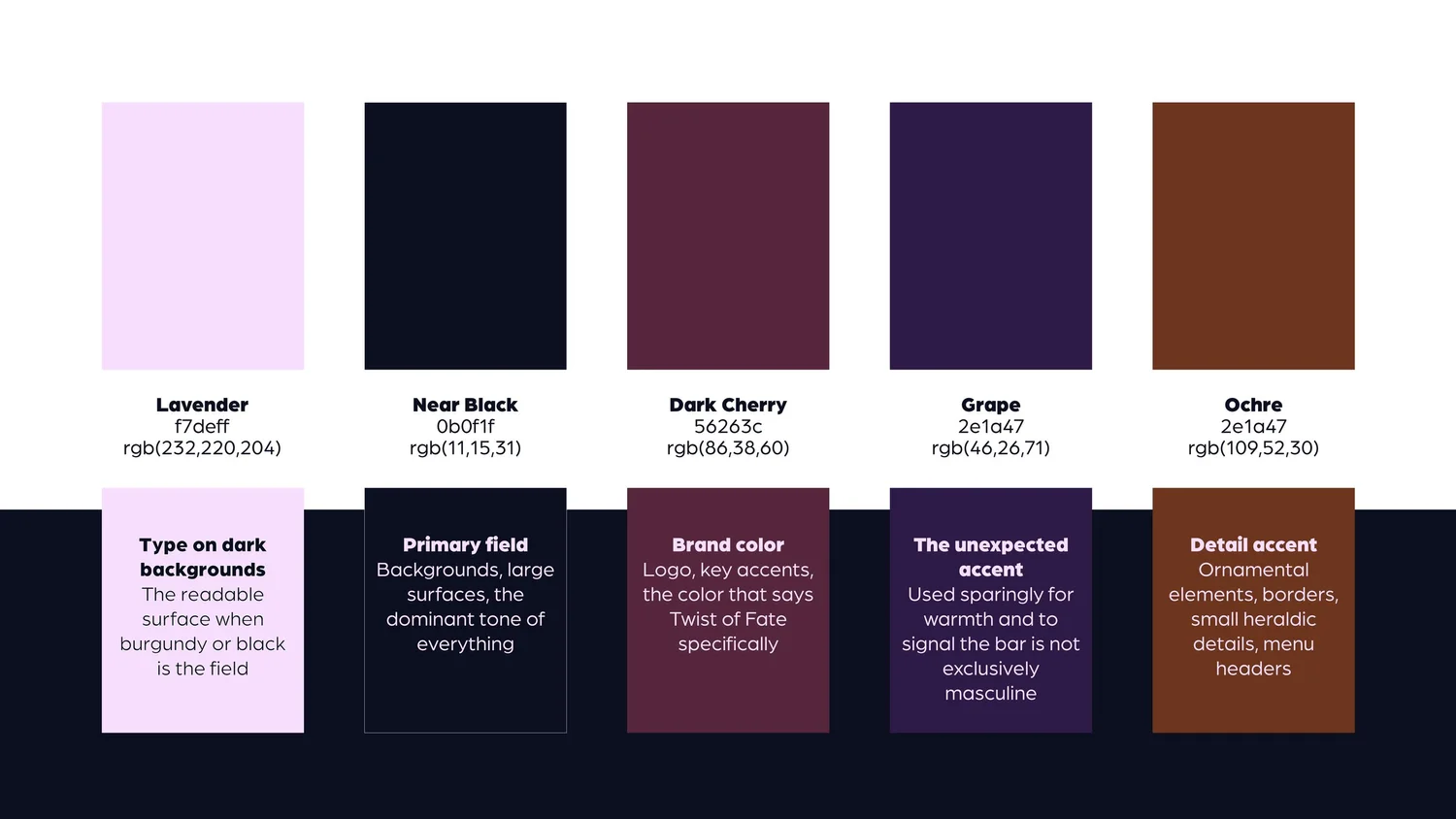
Each color carries a reason. Lavender pulls from old paper and handwritten menus, keeping the brand from feeling digital. Near-black makes the brand feel like the room looks. Not pure black; there's warmth in it. Dark cherry is blood, wine, velvet, medieval heraldry. Grape breaks the medieval register just enough: dusty and slightly tired, like something beautiful that's been through some things. Ochre marks the things worth noticing, matte rather than metallic, because this is a dive bar with taste, not a luxury brand. Seasonal petrol, ghost gray, and forest bring in the clouds, the sea, and the trees that make Seattle home.
Occult, medieval, gritty, feminine
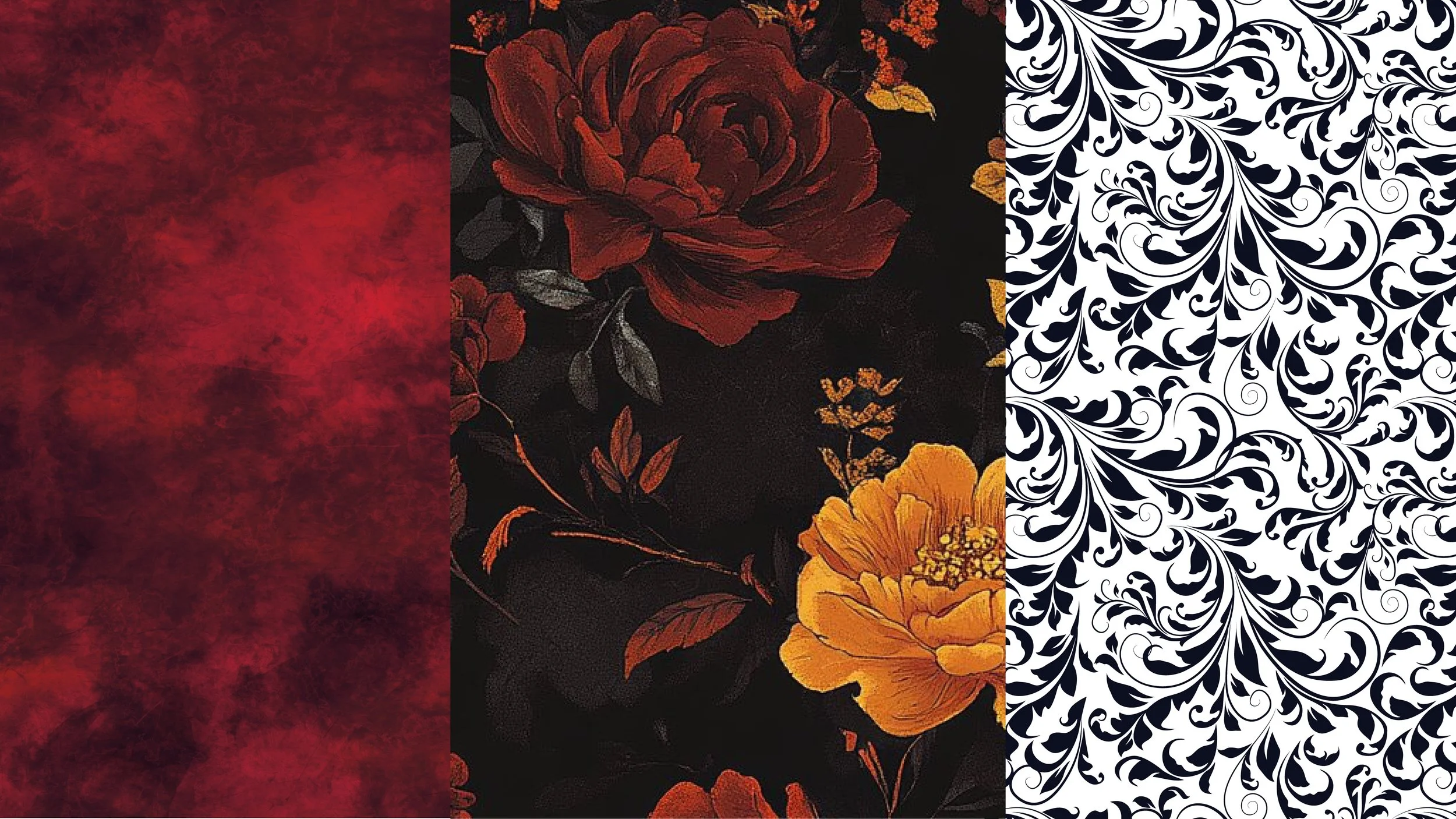
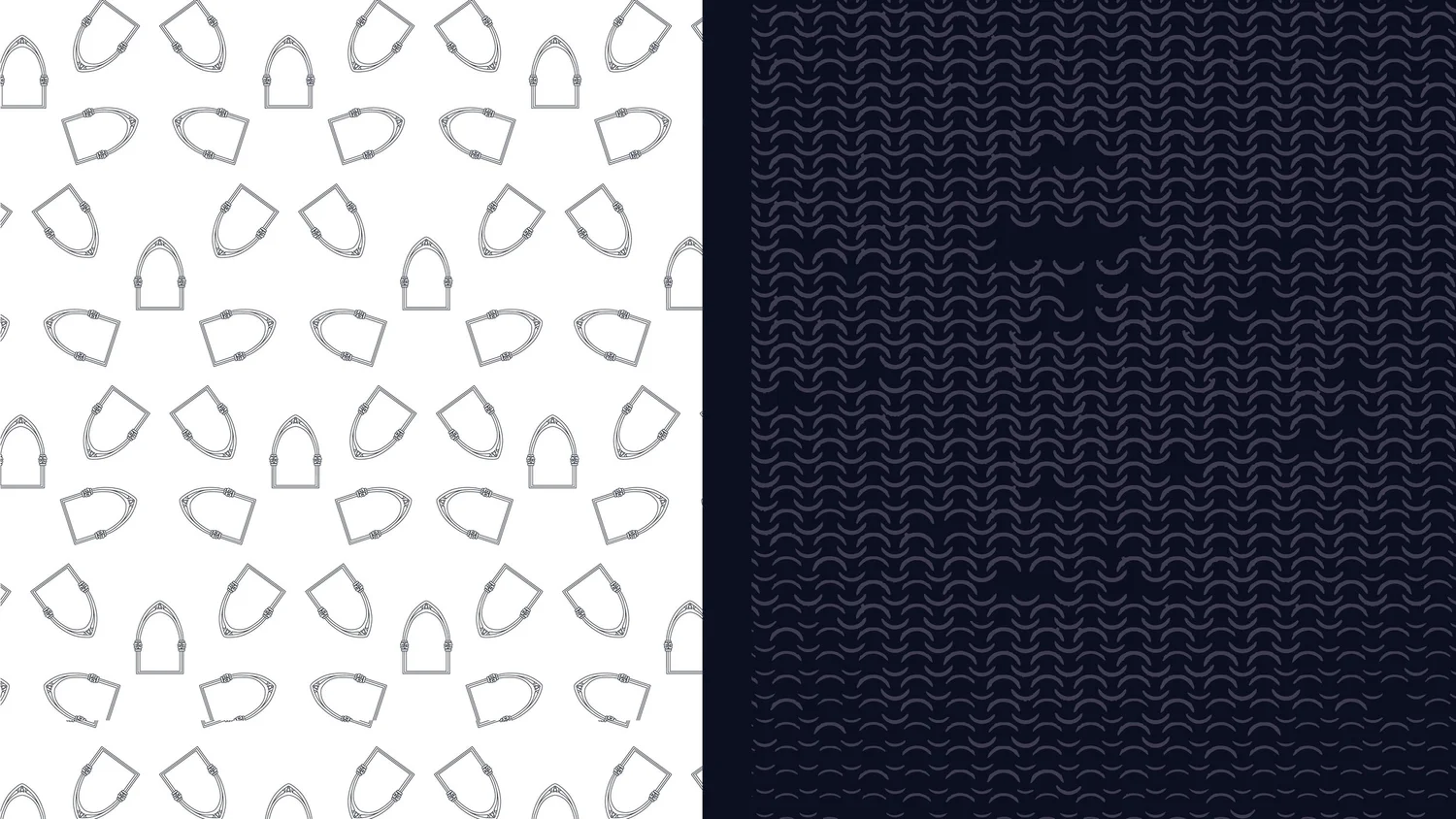
A vocabulary of patterns and textures (the pentagram, chainmail, roses, broken stone, Venetian plaster, and paisley) that gives the brand surfaces to live on without ever tipping into theme-bar territory.
One logo that wanted to be many
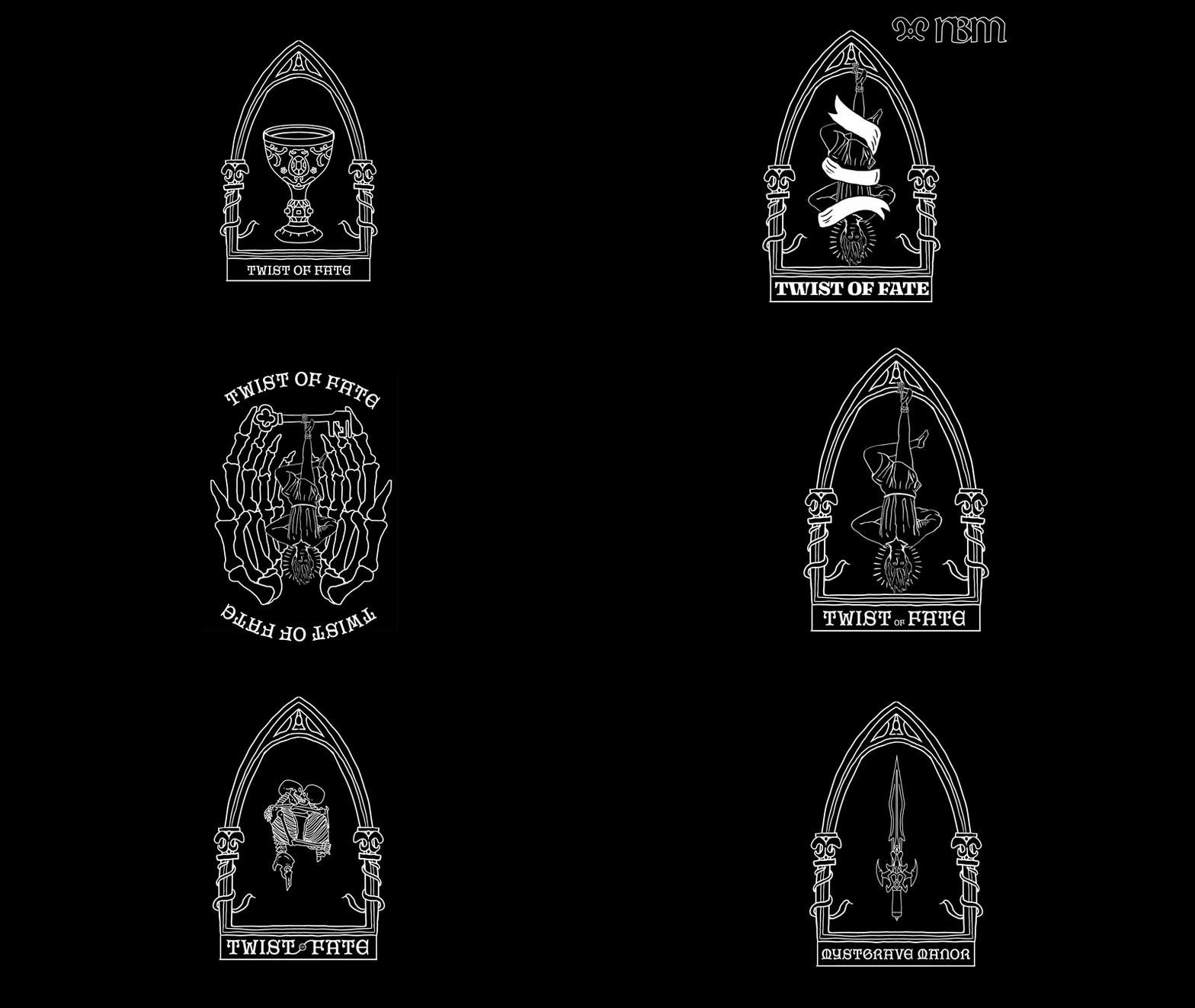
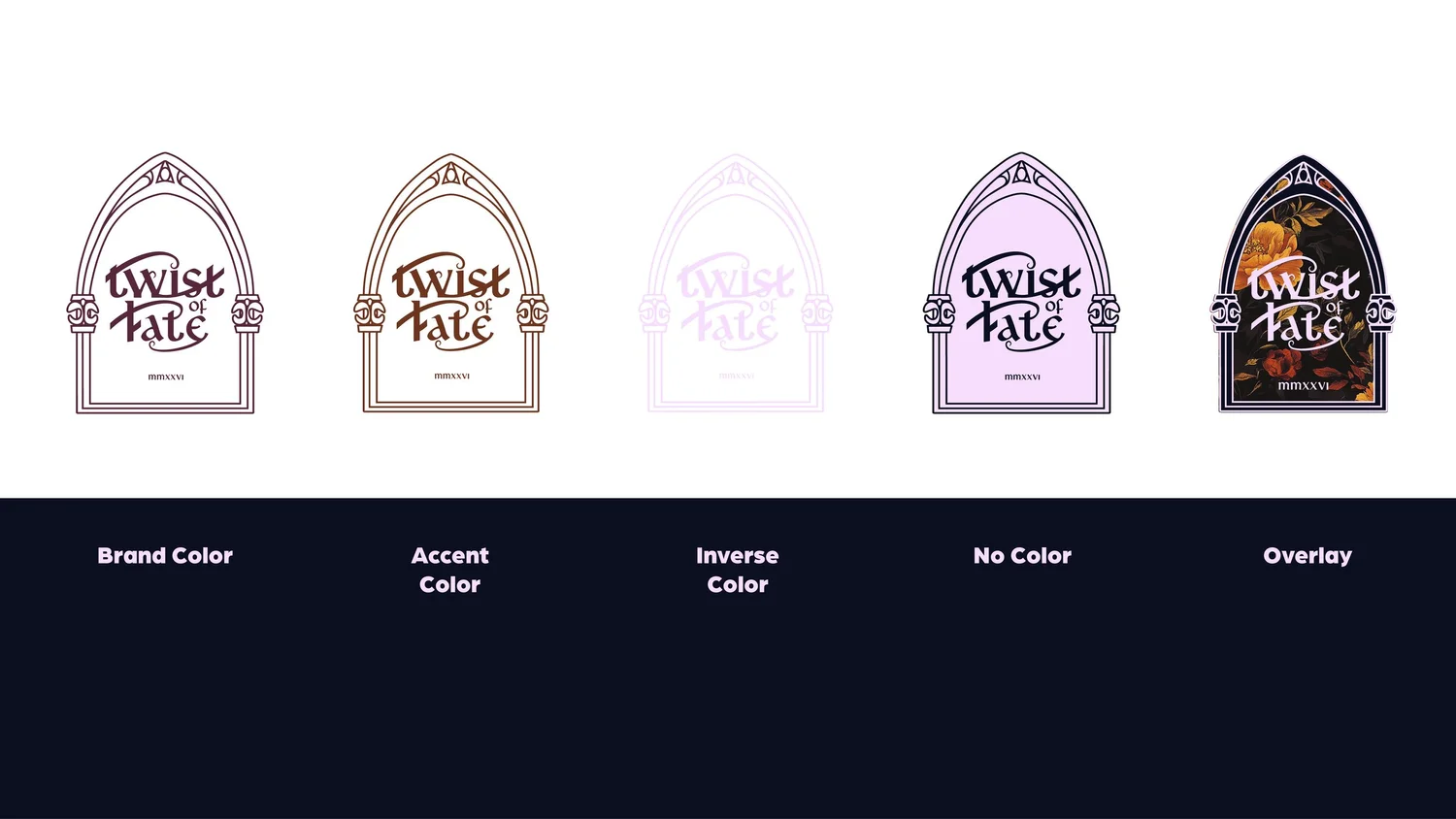
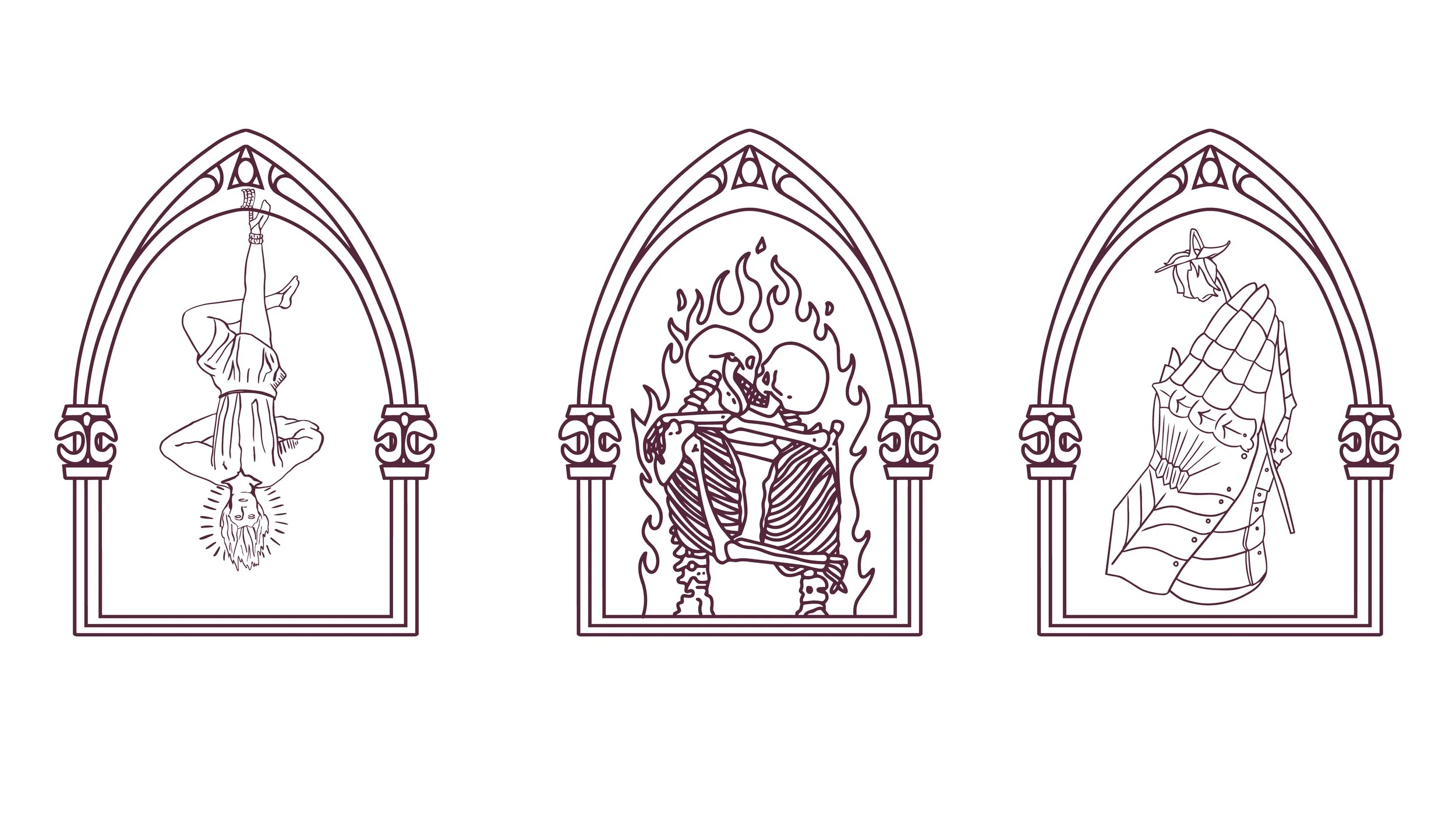
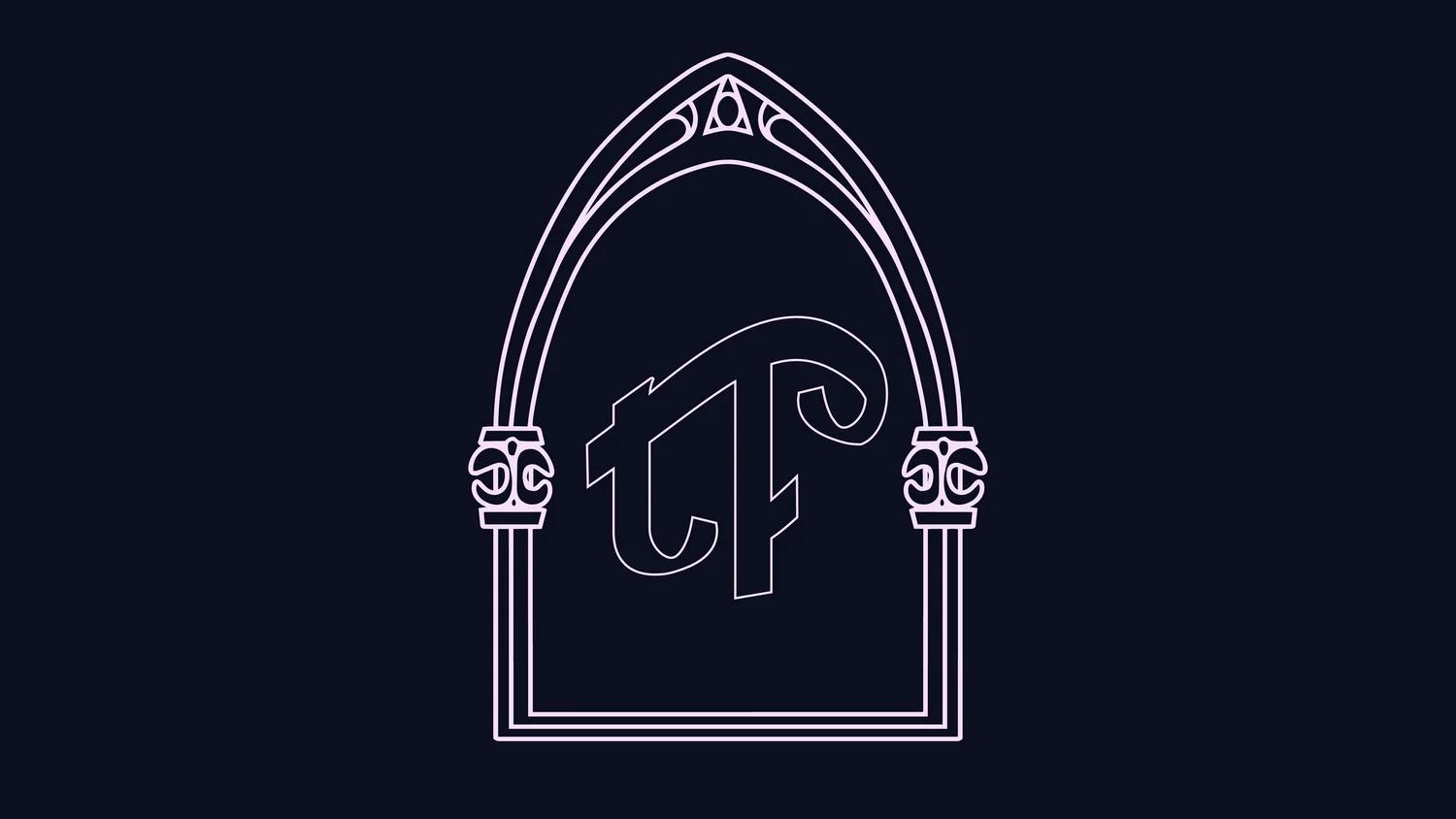
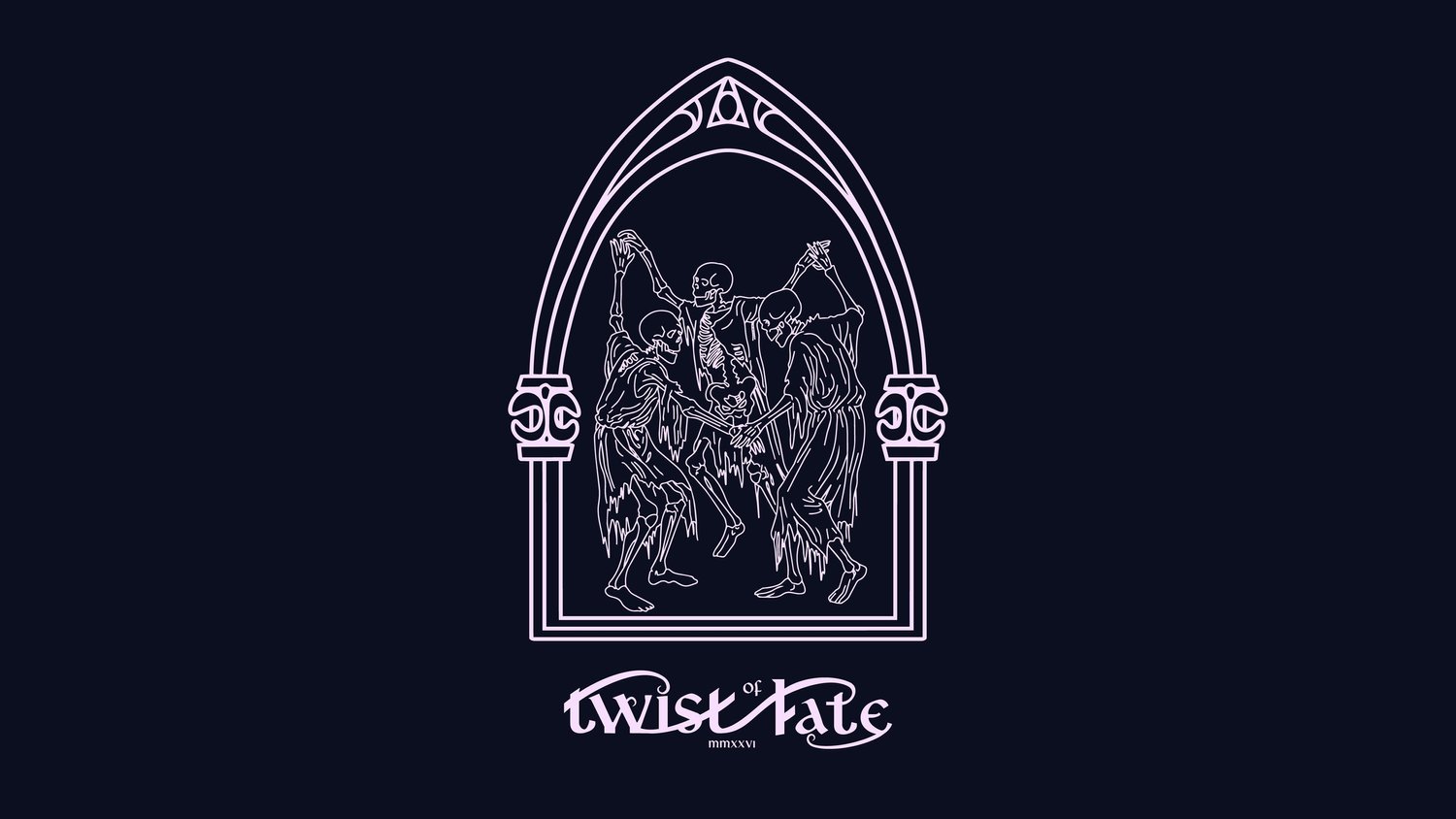
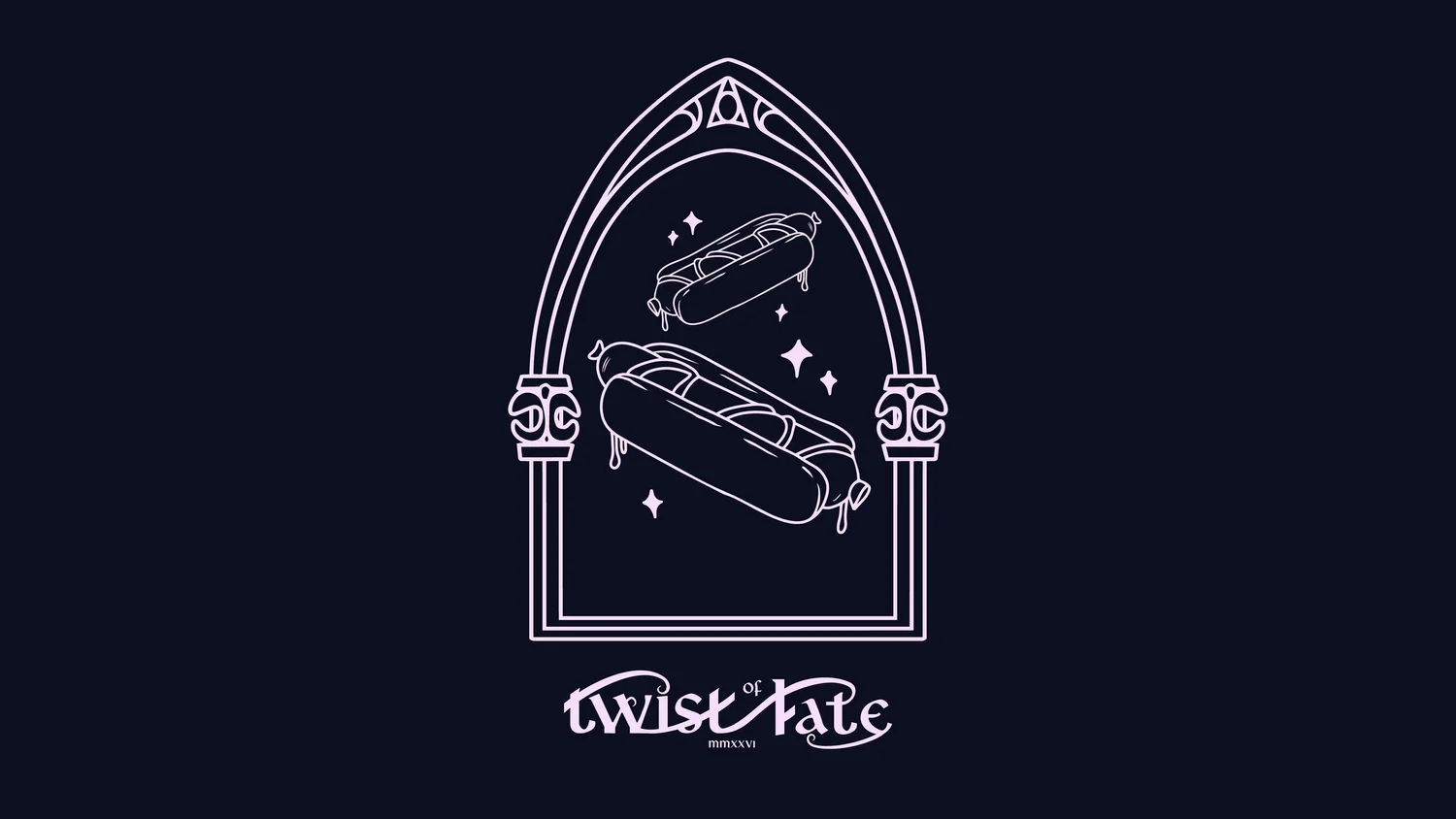
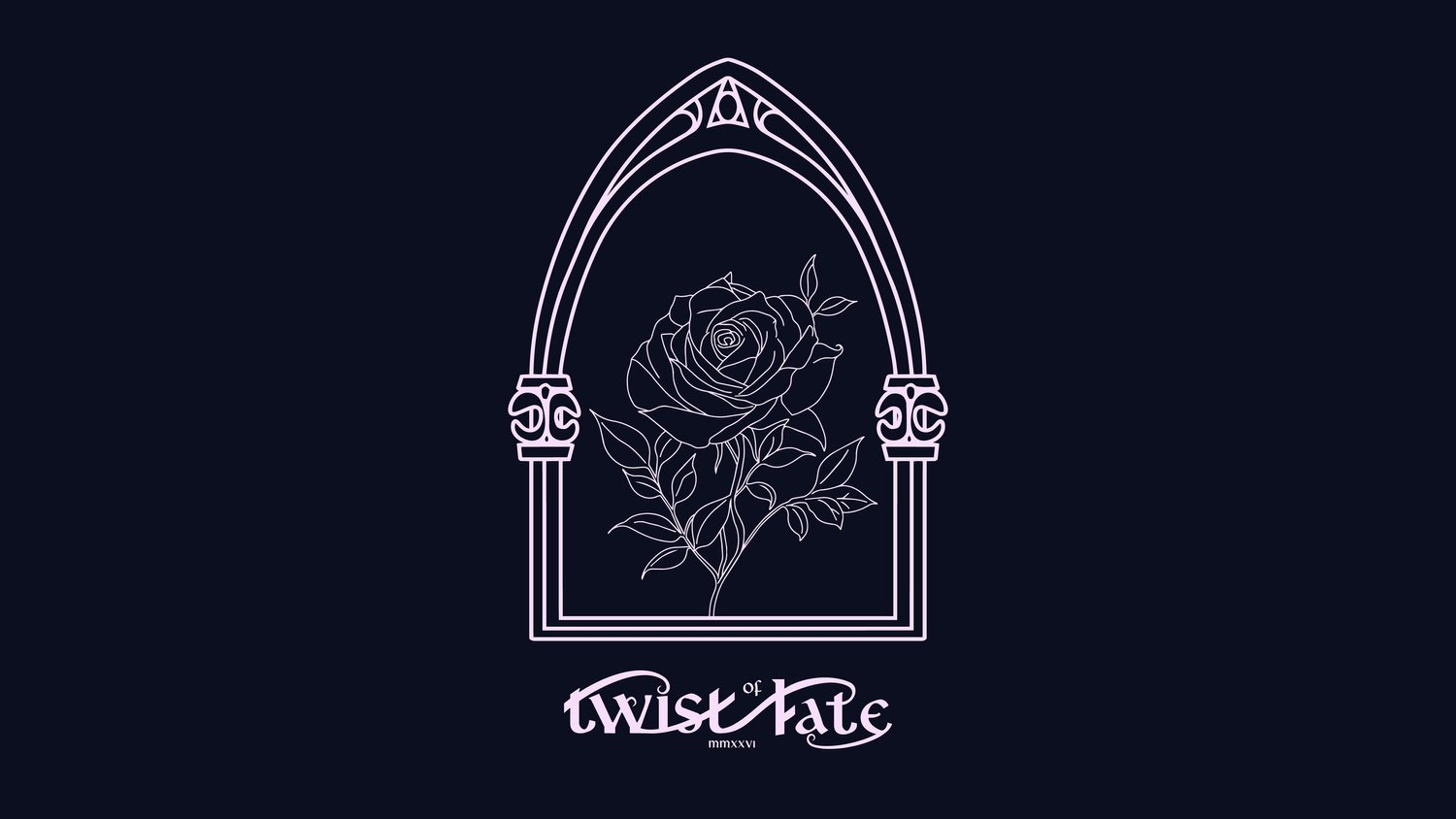
The owner wanted a huge range of artistic representations of the mark. Every time we drew one, it came out too busy to read at a distance. So I advised splitting the problem: a simple, font-driven primary logo, a manipulation of Libre MN, paired with a basic medieval arch acting as an icon. The arch becomes a container we can fill with different artwork for social, print, and merchandise, while the primary mark stays constant and legible.
That reframed the owner's instinct from a liability into a feature. Multiple shifting logos aren't inconsistency. They're a system, every variation traceable to the same visual DNA. The principal mark anchors everything; secondary marks adapt for glassware, signage, merchandise, and print without diluting the core.
A repository, not a one-off
To hit the owner's goal of a system that runs without constant design support, I built a growing repository of illustrations that work as collateral and alternate logos, an asset kit the bar can draw from to keep producing on-brand work without routing it back through me.
One brand, running at cadence
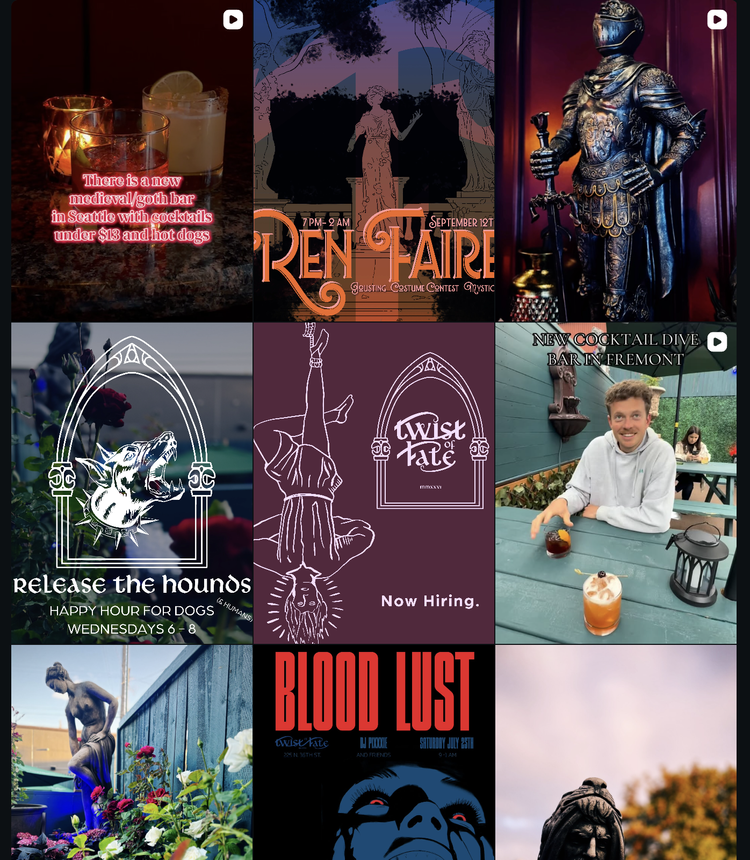
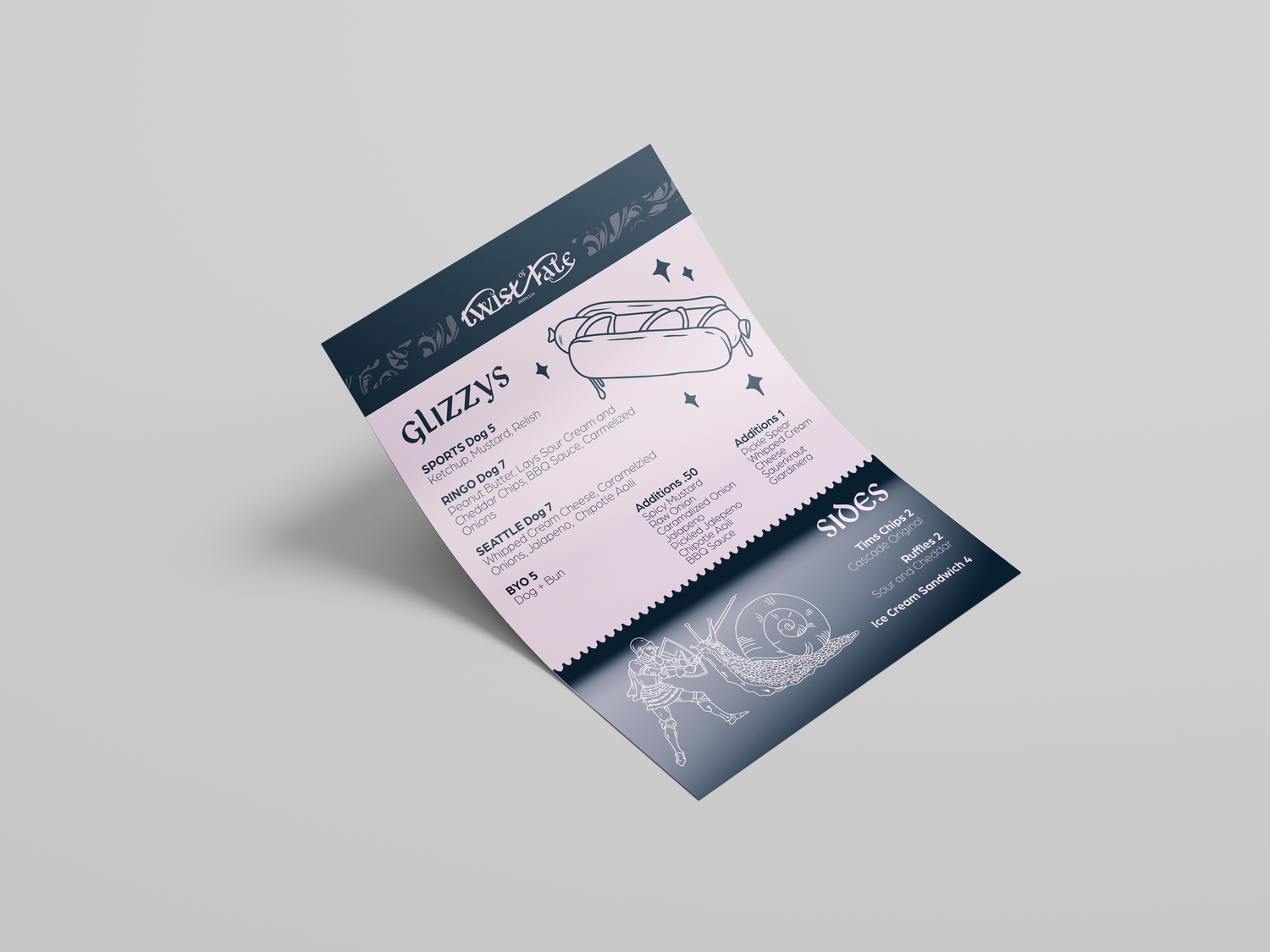
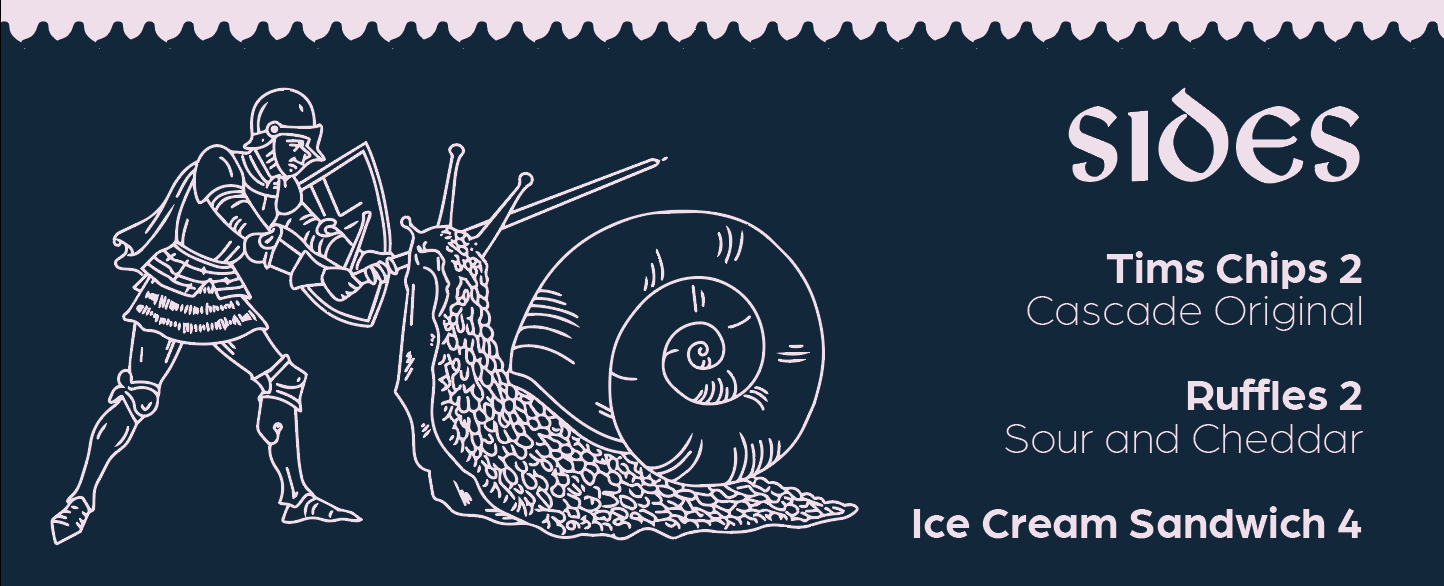
The social grid is where the system proves itself: the arch, the marks, and the illustration repository running across wildly different posts, every one unmistakably Twist of Fate. The kitchen menu carries the same DNA into dense, functional information without losing the atmosphere.
A brand that varies without breaking
Twist of Fate opened in June 2026 with press in The Seattle Times and The Infatuation. The identity does the one thing the owner wanted and the one thing that seemed impossible at the start: it shifts constantly and still reads as itself. The shifting marks became a feature of the brand instead of a liability, which is the whole argument for building a system instead of drawing a logo.
Contact Me