
Tensar • Geosynthetics
A render library for a product that disappears underground
Tensar's geogrid does its work buried under roadbeds and foundations — invisible the moment it's installed. Every piece of marketing had to fall back on flat jobsite photography or studio photographs of physically cut sections of a product. So I modeled the line from scratch.
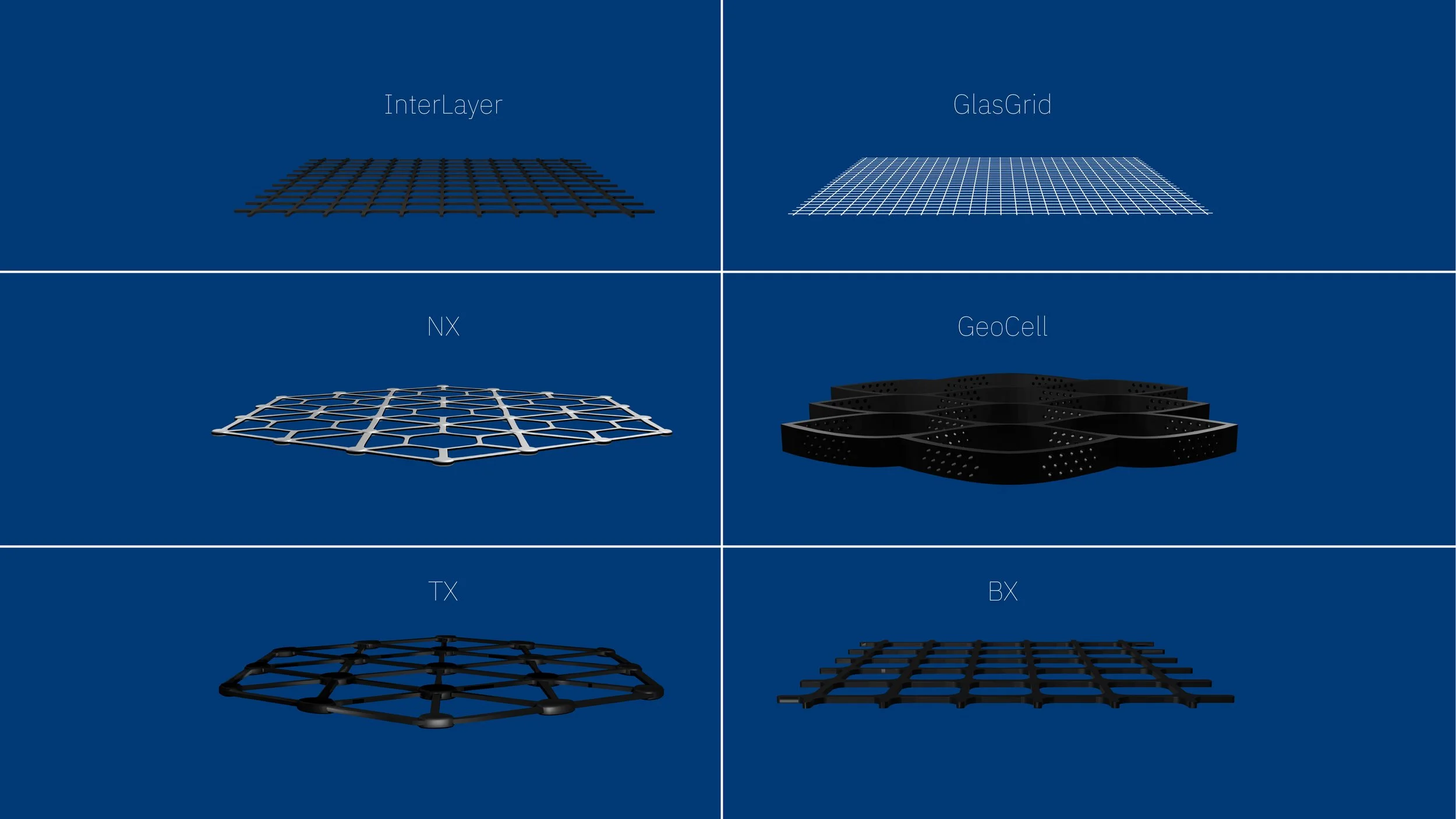
No usable PNGs of the product they sell
An entire geogrid product line with no usable 3D renders — nothing for the website, nothing for campaigns, nothing for the internal specification tools the sales team relied on.
What existed was jobsite photography: muddy, inconsistent, shot in whatever light the day gave, and useless for showing structure. A geogrid's value is in its geometry — the rib profile, the aperture, the way aggregate locks into it.
Build it once, use it everywhere
Rather than commission photography that would need recommissioning for every new application, I treated the product line as an asset system — modeled once to spec, then rendered into whatever the next campaign needed.
-
Model to spec
Each product built in Blender from engineering drawings and physical samples, so rib dimensions and aperture geometry are accurate rather than approximated.
-
Material and light
A shared material and lighting setup across the line, so every product reads as part of one family no matter which render it appears in.
-
Render and hand off
Hero, cutaway, and in-situ views exported at print and web resolution, organized so the team can pull what they need without coming back to me.
- 6+ Products modeled across the full geogrid line
- 20+ Renders delivered for web, print, and sales collateral
- ∞ Reuse — owned outright, no per-use licensing
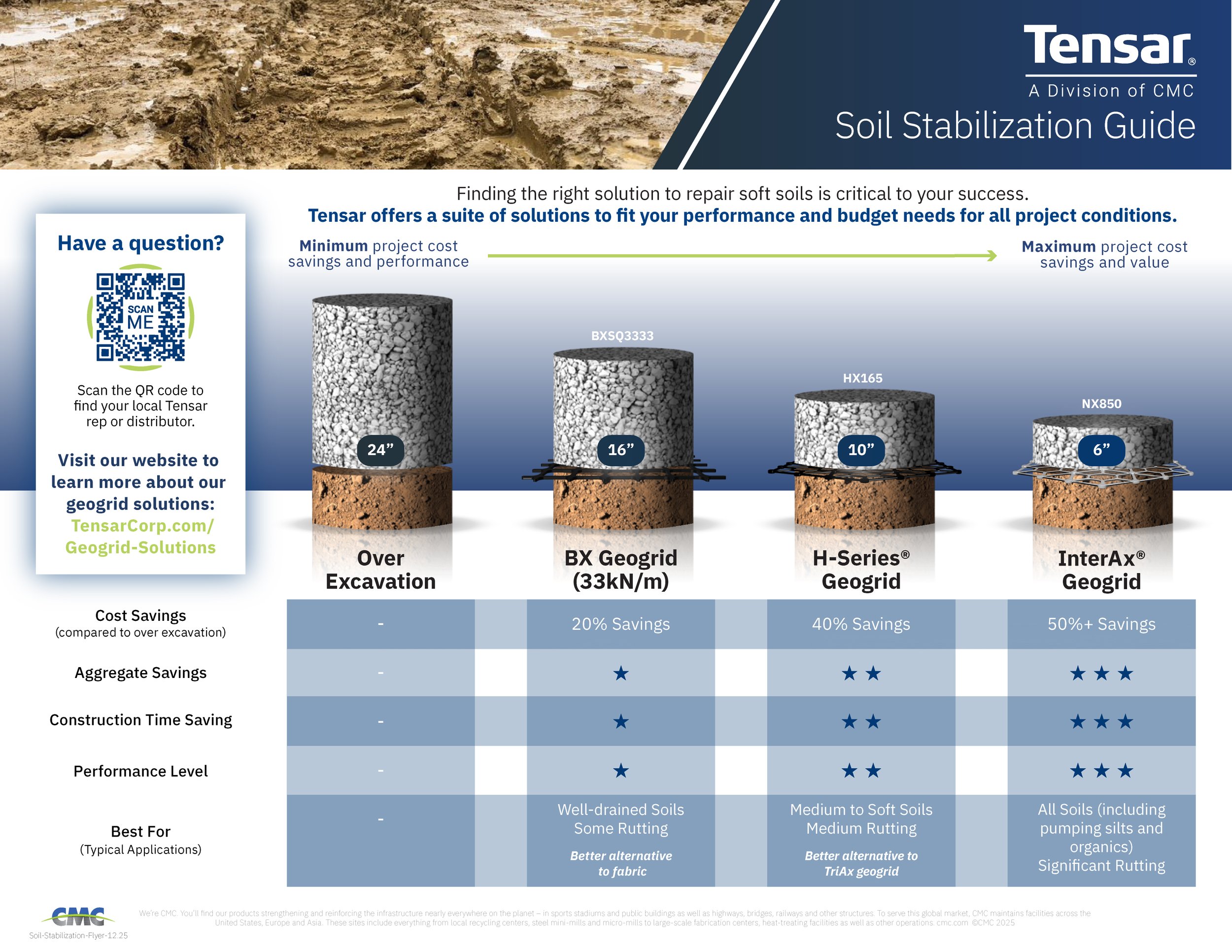
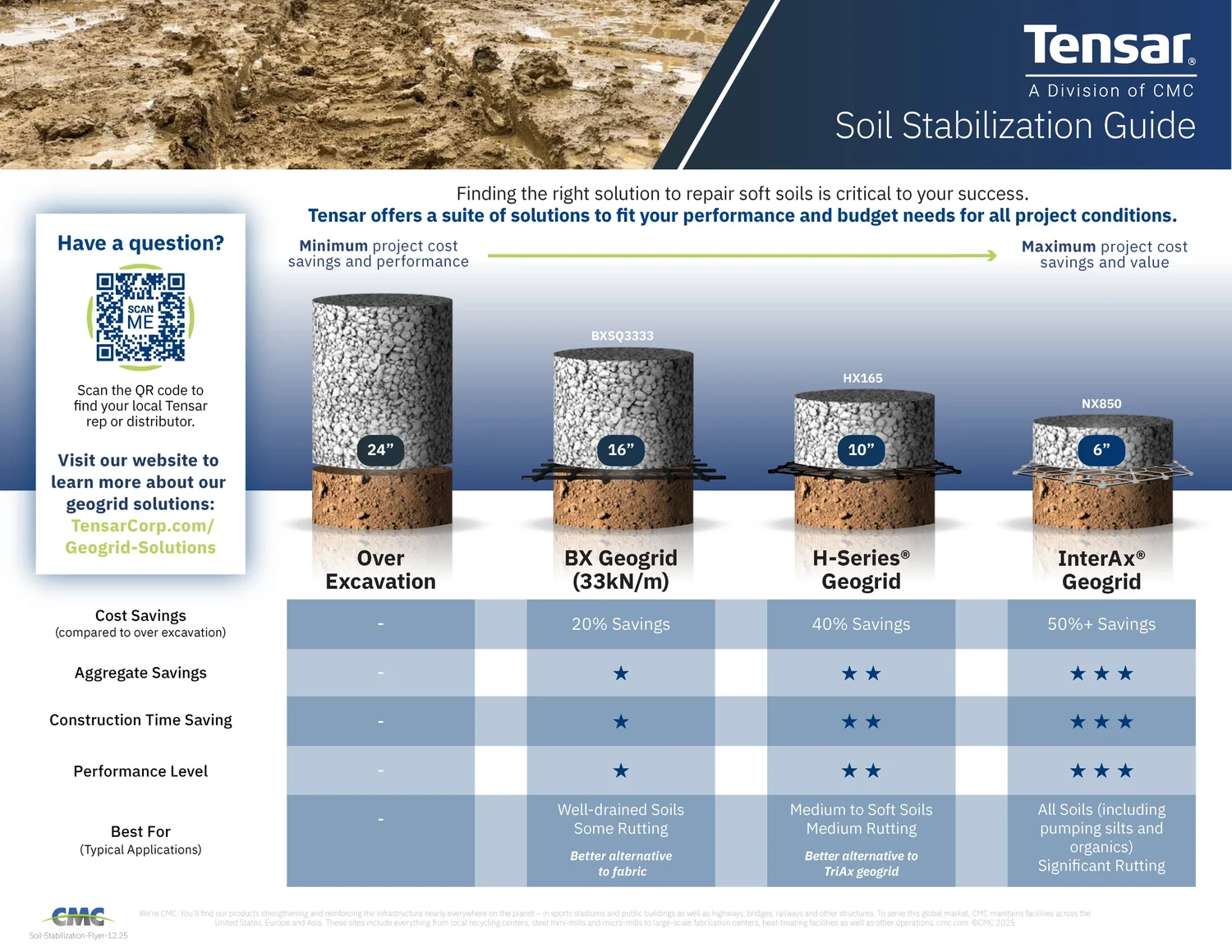
Tensar's first photorealistic render library
A reusable asset system now powering web, campaigns, and sales collateral — and the internal tools that spec the product. The library belongs to Tensar outright, with no per-use licensing and no re-shoot when the next application comes up.
The wider point: for a product that vanishes on installation, a render isn't a substitute for a photograph. It's the only way to show the thing at all.