
Commercial Metals Co. • Construction Materials
One embedded designer across three industrial brands
Three brands under one parent, each with its own audience, its own campaign calendar, and its own opinion about what the brand looks like. The work wasn't a project with a finish line — it was becoming the consistent visual hand across all of it.
Constant demand, in need of a consistent hand
Multiple brands, constant demand — campaigns, guidelines, decks, and event identities, all needed on overlapping timelines and all needing to look like they came from the same organization.
Handled the usual way, that means a rotating cast of freelancers and agencies, each re-onboarded from scratch, each interpreting the brand slightly differently. The drift is gradual and nobody notices it happening until the decks, the ads, and the booth graphics no longer look related.
Three brands, running in parallel
Not a sequence of projects but a standing capacity — whatever each brand needed that month, produced by someone who already knew the guidelines and didn't need briefing from zero.
-
Campaign creative
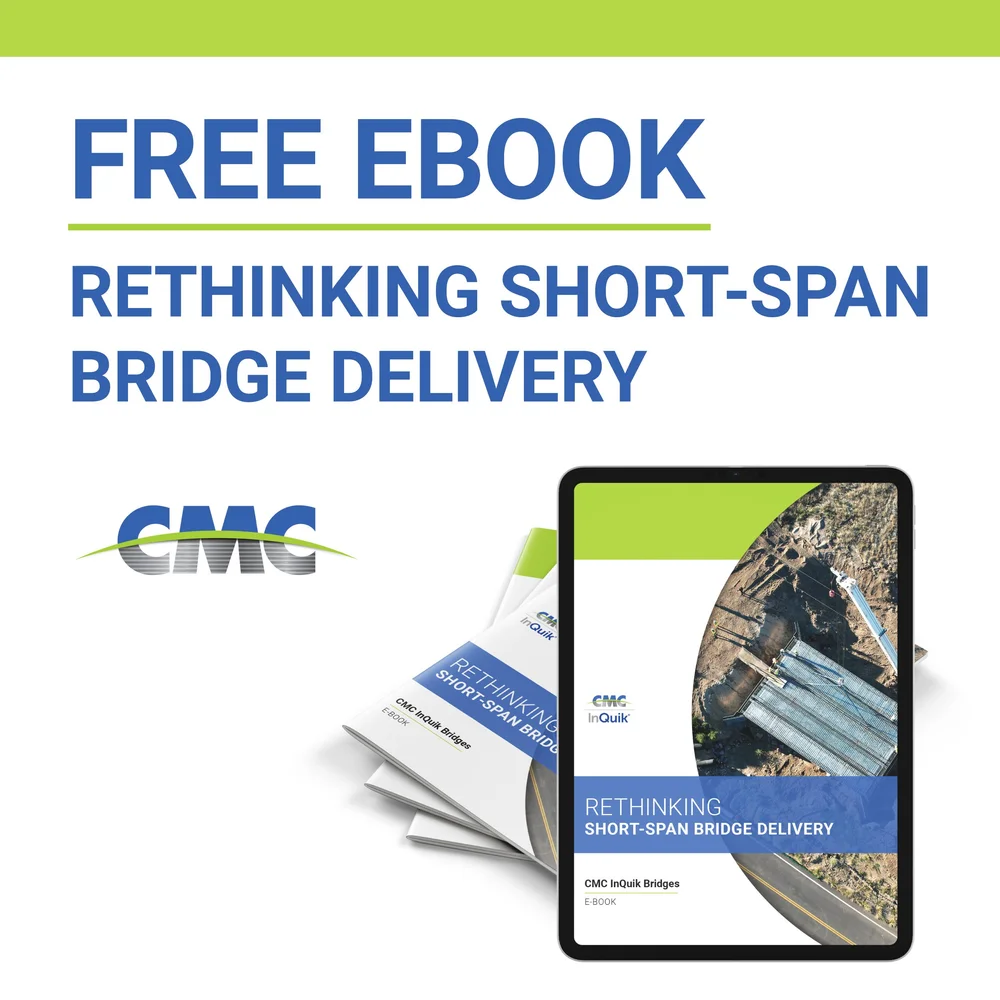
Google Ads through to digital banners and ebook collateral, sized and adapted across every placement each campaign called for.
-
Brand systems
Guidelines, templates, and presentation systems — the infrastructure that lets internal teams produce on-brand work without a designer in the room.
-
Event identity
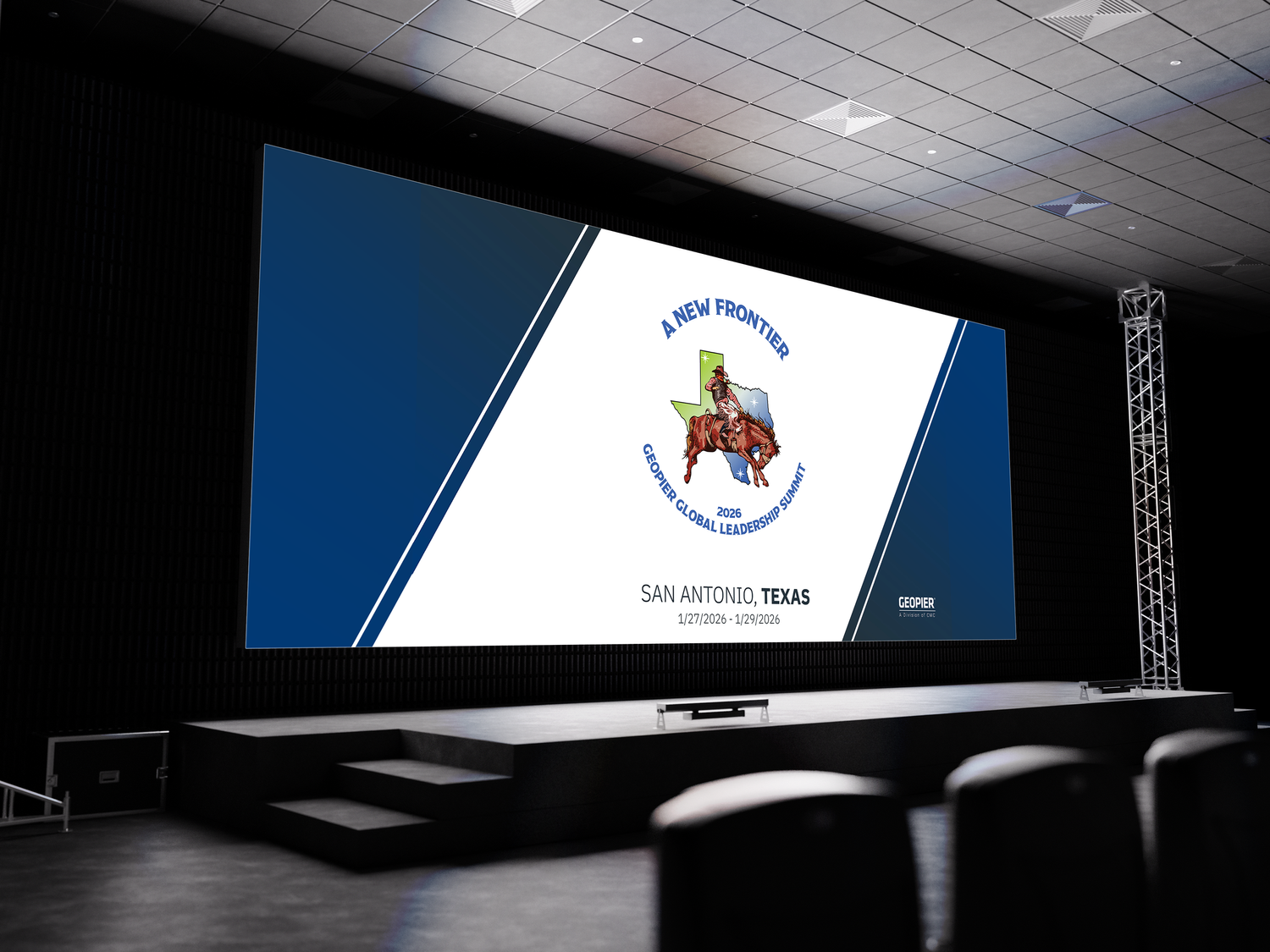
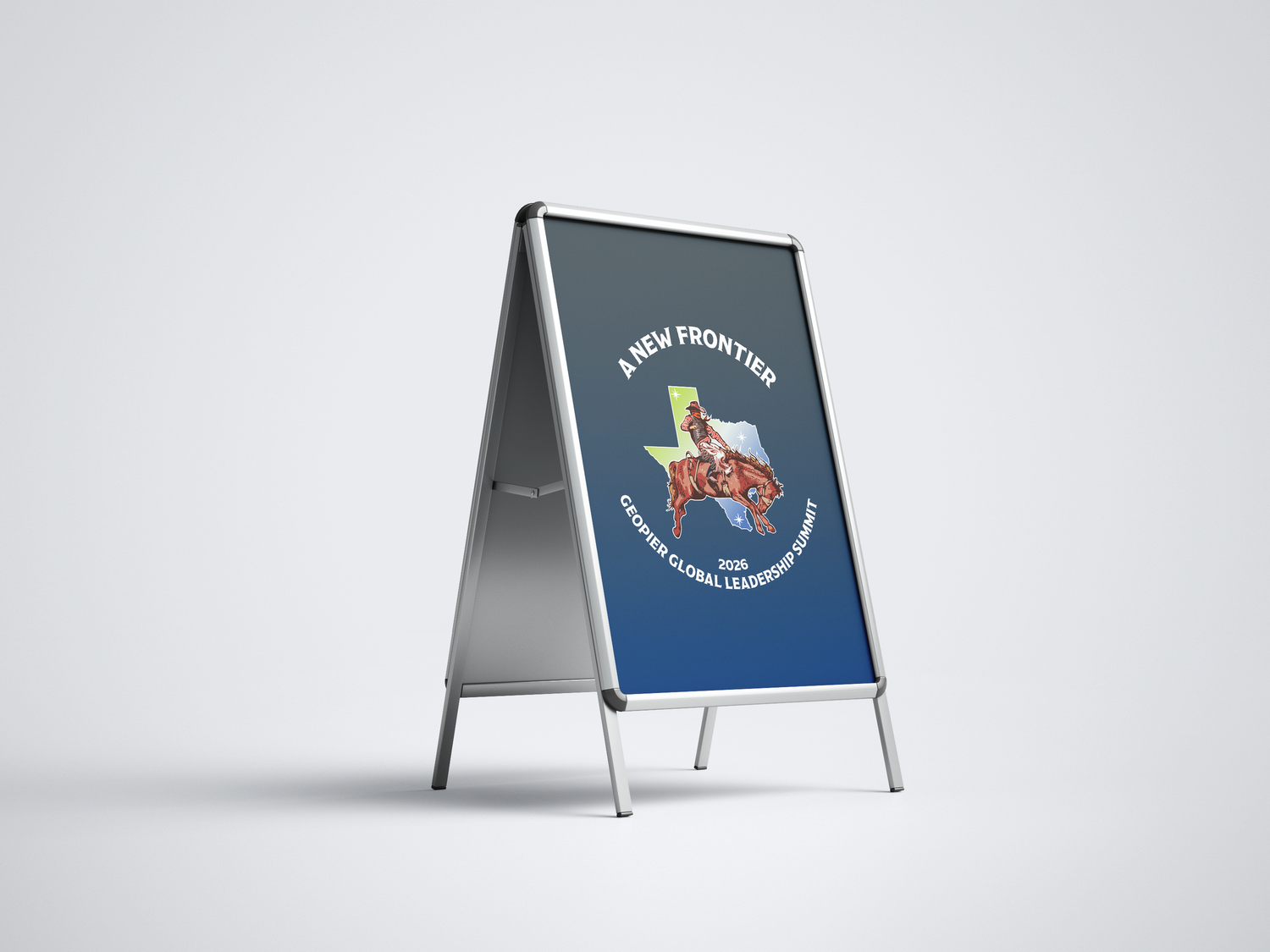
Full visual identity for the Global Leadership Summit and Commercial Team Meeting, from the mark through to environmental and on-screen applications.
- 3 Brands served by a single design partner
- 10 Months of continuous engagement
- 40+ Deliverables
Running as the design function, not a vendor
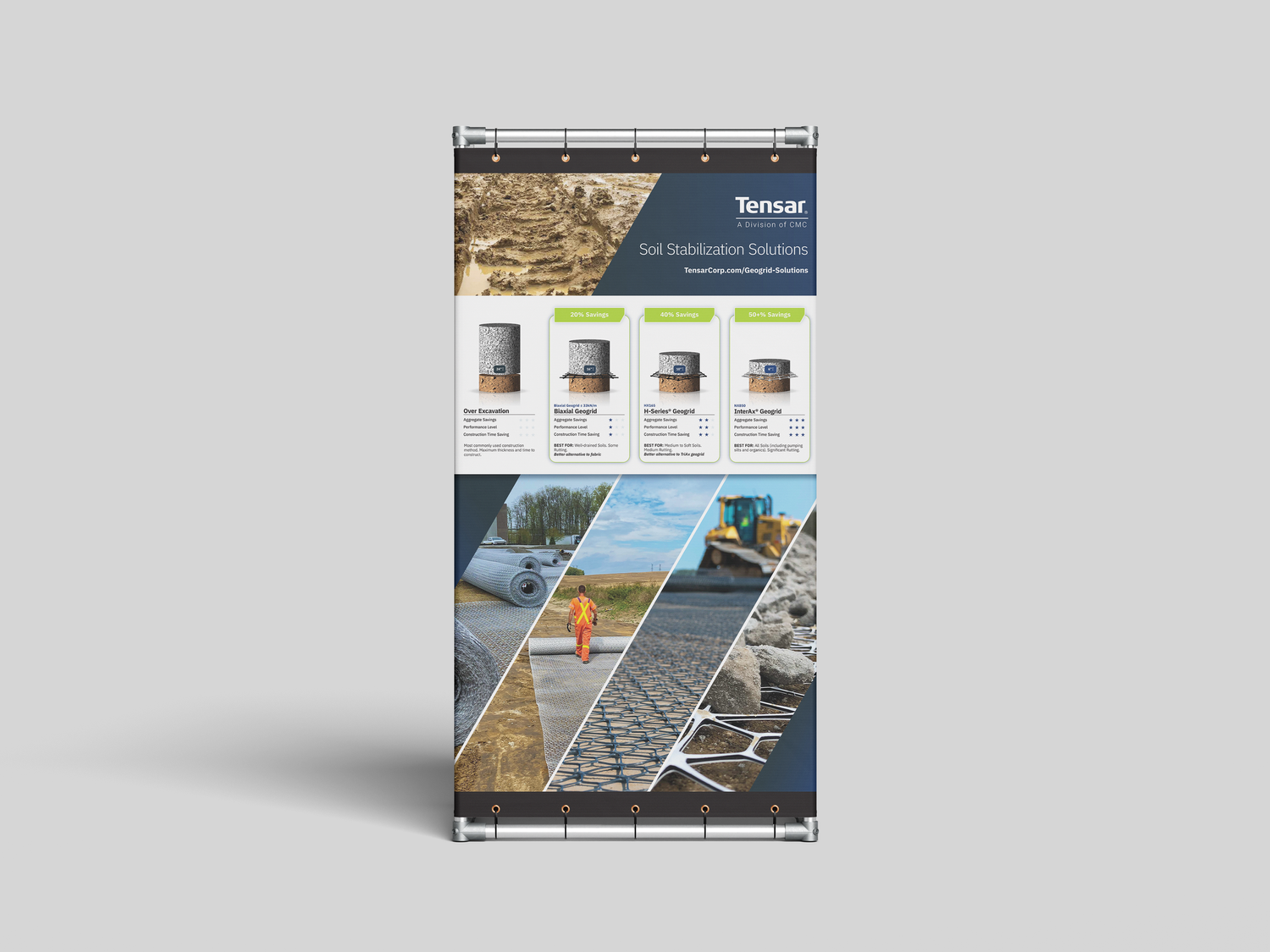
Three brand teams don't coordinate their calendars with each other. A typical day moved across all of them — Tensar flyers in the morning, a Geopier campaign around lunch, a CMC ebook in the afternoon. Working project to project, each of those is a scoping conversation. On standing capacity, it's just triage.
Most of that work ends at a vendor. Printers and web teams can't start until someone hands them direction and the right assets, and that handoff is where schedules usually slip. Because the brand was already in hand, requests skipped the briefing stage entirely — a link and a deadline was usually enough to start. The time that would have gone into re-onboarding went into the work instead.
Which is what makes short-notice work possible rather than heroic. A print run that had to move immediately went out on a weekend, because every asset it needed was already built and organized. A CEO's pitch deck got refined the night before the presentation. Explainer animations shipped against the website's update schedule instead of dictating it.
The practical effect is that the marketing teams stopped treating design as a bottleneck to plan around. Things they'd previously have descoped or handed to whoever was free got made properly, because the capacity was already there.
The work that outlasts the contract
The most durable thing I built for CMC wasn't a campaign. It was the guidelines, templates, and presentation systems that let people who aren't designers produce work that still looks like the brand — a sales manager building a deck at 9pm, a regional team adapting a campaign for their market.
That's the same instinct behind the Tensar render library and every asset system I build: solve it once, structure it so it's reusable, and hand it over in a state where nobody has to come back to me for the routine case. It makes me cheaper to work with over time, which is the point.
Every brand expanded scope over time
The ongoing design partner across CMC's brands — from Google Ads through to the full identity for the Global Leadership Summit — with every client expanding scope over time.
That last part is the whole result. Scope grows when the work is good and the friction is low; a partner who already knows the brand is cheaper to use than one who doesn't, so more work finds its way over.